
Is an ionic foot bath safe? For most healthy adults, a well-built device used as directed carries little risk: the current is low, the session lasts about 30 minutes, and good units switch themselves off if something goes wrong. But “most adults” isn’t everyone. Some people should not use an ionic foot bath at all, and the quality of the device matters more than most buyers realise.
We’ve designed and serviced ionic foot baths in Sherbrooke, Québec, since 2008. This guide sets out, plainly, who should avoid one, what makes a device electrically safe, and the eight rules we give every new owner.

Table of Contents
The short answer
An ionic foot bath passes a small direct current through warm, salted water using a metal array (the ionizer). Your feet rest in the water. You may feel a light tingling, and the water changes colour as the metal of the array reacts with the salt and water.
The main safety questions are therefore simple:
- Electrical: is the current low, regulated and isolated from mains power?
- Personal: do you have a condition or device that rules out electrical stimulation, or makes any detox-style routine a bad idea?
- Practical: is the water a comfortable temperature, is the array clean, and are you following a sensible schedule?
If the answer to the first and third is yes, and none of the contraindications below apply to you, an ionic foot bath is a low-risk wellness routine. It is not a medical treatment, and it shouldn’t replace one.
Who should not use an ionic foot bath
These are the contraindications we publish for our own device. They are conservative on purpose. If one applies to you, don’t use an ionic foot bath, whatever the brand.
| Situation | Why it matters |
|---|---|
| Children under 6 | Too young to report discomfort reliably; their bodies respond differently to current |
| Pregnancy or breastfeeding | No safety data, so we apply the precautionary principle |
| Pacemaker or implanted defibrillator | Any external current near the body is a risk for implanted electronics |
| Chemotherapy or radiation therapy in progress | Your care team should approve any new routine during treatment |
| Dialysis or severe kidney impairment | The kidneys regulate salts and fluids; don’t add stress |
| Epilepsy treated with medication | Electrical stimulation is best avoided |
| Organ transplant with anti-rejection therapy | Medication balance is delicate; avoid new routines |
| Frail health or many medications | Talk to your health professional first |
The full list for each function of our device, including the zapper, is on our contraindications page.
Situations that call for extra care
Some conditions aren’t on the list above but still deserve a conversation with your health professional before you start:
- Reduced sensation in the feet, for example with diabetes. You may not notice if the water is too hot. Check the temperature with your hand or a thermometer.
- Open cuts, sores or skin infections on the feet. Wait until the skin has healed.
- Very low or very high blood pressure, or a history of fainting. Sit comfortably and stand up slowly afterwards.
- Metal implants or prostheses. Ask your surgeon or doctor; this is a firm contraindication for zapper use on our device.
Is an ionic foot bath safe electrically?
Water and mains electricity need careful engineering. This is where cheap devices and well-built ones differ most, and where you should look hardest before you buy.
Where the power conversion happens
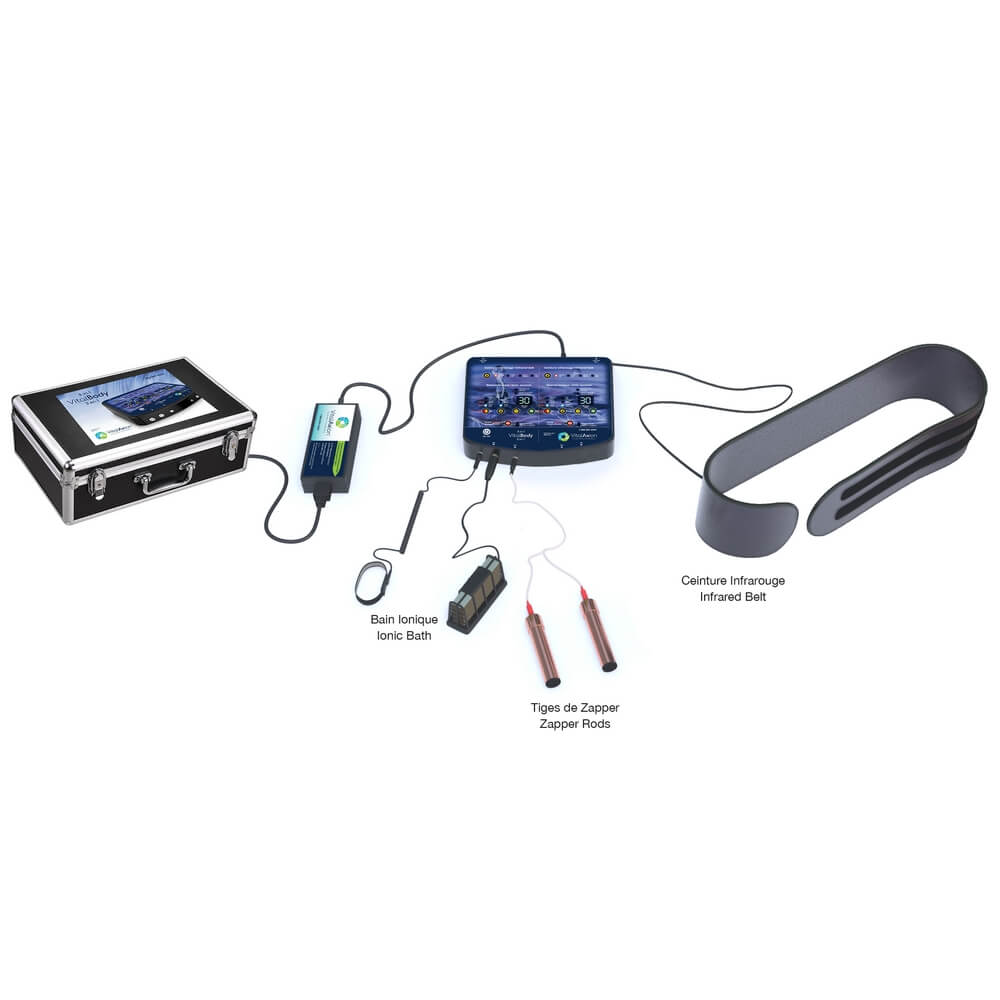
On a safe design, the conversion from 110 V or 220 V mains power to low-voltage direct current happens outside the main unit, in a sealed, certified external power supply. The device that sits next to the water then runs on low voltage only.
Our VitalBody uses an external ETL, FCC and CE-certified switch-mode power supply (24 V). Many low-cost imported units convert mains power inside the main box, right next to the basin. Look for a certification mark on the power supply itself, and be wary of any unit that plugs straight into the wall with no separate adapter.
Regulated current and automatic cut-off
The current in the water depends on how much salt you add. Too much salt means too much current. A good device measures the current and regulates it, and stops the session if it goes beyond a safe level.
On our device, a processor stabilises the current between 1 and 3 amps (you choose low, medium or high), and audible and visual alarms warn you if the wristband isn’t connected properly or the water needs more salt. Ask any seller how their device controls current. “It just works” isn’t an answer.
The array never touches your skin
The ionizer sits in the water, between your feet. You shouldn’t touch it with your feet or hands during a session. On well-designed arrays, the metal plates are enclosed in a plastic housing, so accidental contact is unlikely.
Is an ionic foot bath safe for daily use?
We don’t recommend daily sessions. For most adults, one session every three to four days, about 30 minutes each, is plenty. Leaving two to three days between sessions gives you time to notice how you feel, and keeps the routine comfortable.
Our full guide on ionic foot bath frequency explains where these numbers come from and how to adjust them for beginners, older adults and practitioners.
What you might feel during and after a session
Most people feel relaxed. Some notice:
- A light tingling in the feet, especially with a more powerful array. It’s harmless, but if it’s uncomfortable, lower the power or switch to a gentler array.
- Swelling of the feet right after the session, which usually fades within a few hours.
- Thirst, tiredness or a mild headache later in the day. Drink water, rest, and space out your next session.
These reactions are usually mild and short-lived, but they are a signal to slow down. They don’t change the answer to “is an ionic foot bath safe?” for most people, but they do mean your next session should be gentler. If you feel unwell during a session, stop it, take your feet out of the water and rest. If symptoms persist, talk to a health professional.
A note on the water colour: the brown or orange water is mostly the result of the array’s metal reacting with salt and water. It isn’t a measure of toxins leaving your body. Our guide to ionic foot bath water color explains the chemistry.
8 rules for a safe ionic foot bath
These are the rules we give every new owner. They apply to any brand.
1. Check the contraindications first
Read the table above before your first session, and again if your health changes. When in doubt, ask your health professional.
2. Use a device with a separate certified power supply
The mains conversion should happen away from the water, in a sealed adapter with a recognised certification mark.
3. Start gently
For your first two or three sessions, use low power, 15 to 20 minutes, and a gentle array if your device offers one. Our cylindrical ionizer is made for beginners, older adults and sensitive users: it gives a moderate session without the electric sensation.
4. Get the water temperature right
Warm, not hot. Test it with your hand, and take extra care if you have reduced sensation in your feet.
5. Add salt gradually
Salt makes the water conductive. Add a little at a time, following your device’s instructions. Too much salt can trigger the over-current protection or make the session uncomfortable.
6. Stay seated and don’t touch the array
Sit comfortably, keep your feet flat in the basin and don’t move the array during the session. Stand up slowly afterwards.
7. Keep the array clean
Rinse it after every session and clean it regularly. A corroded array works less evenly. Our guide on how to clean an ionic foot bath shows the routine.
8. Space your sessions
Two to three days between sessions, about 30 minutes each, and a break if you feel tired or unwell.
Is an ionic foot bath safe for children and older adults?
Children under 6 should not use one. For older children, use the gentlest array, low power and short sessions, with an adult present, and check with a health professional first.
Older adults can usually use an ionic foot bath, but they are more likely to have one of the contraindications above or to take several medications. Start with short, gentle sessions and check with their health professional before the first one.
What about ionic foot baths at a spa or clinic?
Is an ionic foot bath safe at a clinic? The same rules apply. A good practitioner will ask about your health before your first session, check the contraindications with you, and explain what you’ll feel. If nobody asks, ask them. Our guide to your first ionic foot detox session lists the questions worth asking, and our session locator shows practitioners who use our devices.
How to spot an unsafe device
So, is an ionic foot bath safe if it’s very cheap? Not necessarily. Before you buy, look for these warning signs:
- No separate power supply, or one without a certification mark.
- No current control: a single fixed setting and no alarms.
- No contraindications in the manual or on the website.
- Disease claims, such as promises to cure illnesses. A trustworthy seller describes a wellness device as a wellness device.
- No address or phone number for after-sales service.
Our guide on choosing the best ionic foot bath in Canada turns these checks into a simple scoring sheet. In Canada, you can also look up general information on medical devices and health products from Health Canada.
What the science says
Is an ionic foot bath safe and effective? Safe for most people, yes. Effective is a different question, and honesty matters here. There is little scientific evidence that ionic foot baths remove toxins from the body, and the water colour comes mainly from the array, not from your feet. People use them because they find the ritual relaxing and report feeling better. That’s a reasonable reason to use a wellness device, as long as it doesn’t replace medical care.
If you’re curious about the mechanism, our guide on how an ionic foot bath works explains it step by step.
Frequently asked questions
Is an ionic foot bath safe?
For most healthy adults, yes, when the device has a certified external power supply and regulated current, and when you follow the instructions. Some people, listed in our contraindications, should not use one.
Who should not use an ionic foot bath?
Children under 6, pregnant or breastfeeding women, people with a pacemaker or implanted defibrillator, people in chemotherapy or radiation therapy, people on dialysis or with severe kidney impairment, people with medicated epilepsy, transplant recipients on anti-rejection therapy, and people in frail health or taking many medications.
Can an ionic foot bath give you an electric shock?
A well-designed device runs on low-voltage direct current and stops automatically if the current exceeds a safe level. You may feel a light tingling, which is harmless. Never use a device whose mains conversion happens inside the unit next to the water.
Is it safe to use an ionic foot bath every day?
We don’t recommend it. One session every three to four days, about 30 minutes each, is enough for most adults.
Are ionic foot bath side effects dangerous?
Reactions such as tiredness, thirst or a mild headache are usually mild and short-lived. Stop the session if you feel unwell, and talk to a health professional if symptoms continue.
Is an ionic foot bath safe with diabetes?
Talk to your health professional first. If you have reduced sensation in your feet, check the water temperature carefully and inspect your feet before and after each session.
The bottom line
Is an ionic foot bath safe? For most healthy adults, yes: choose a device with a certified external power supply and regulated current, check the contraindications, start gently and space your sessions. If you’re in one of the groups above, skip it, or ask your health professional first.
Questions about your own situation or our device? Contact our team in Sherbrooke, in English or French.
This article is for general information only and is not medical advice. Ionic foot baths are wellness devices and are not intended to diagnose, treat or cure any disease. If you have a health condition, are pregnant, or use an implanted electronic device, talk to a health professional before using one.

